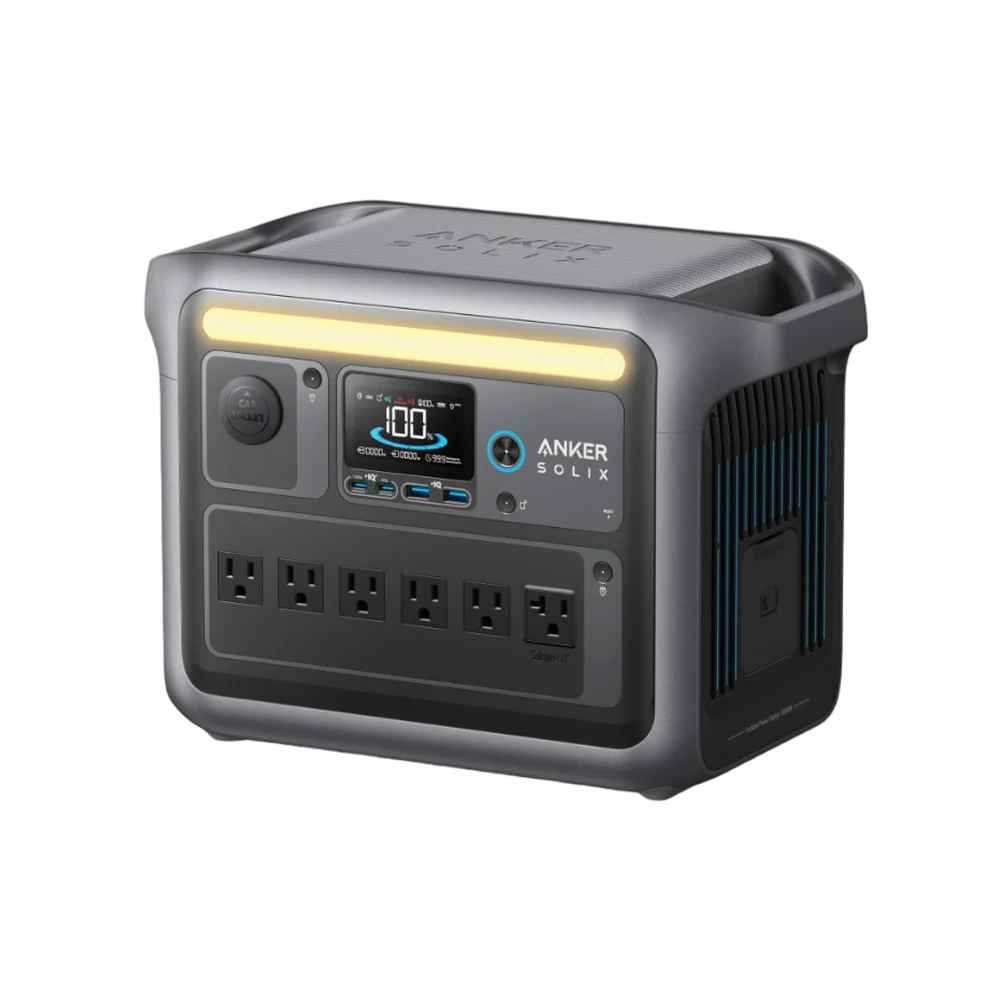
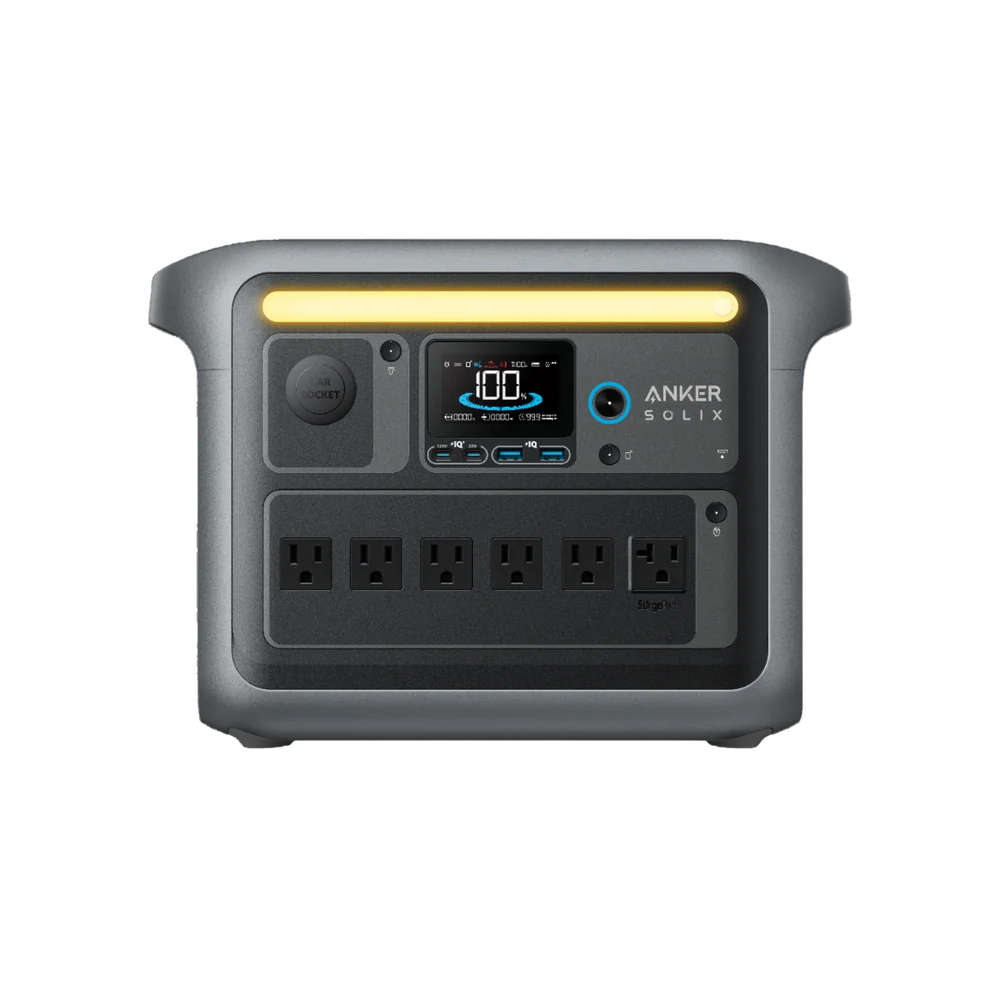
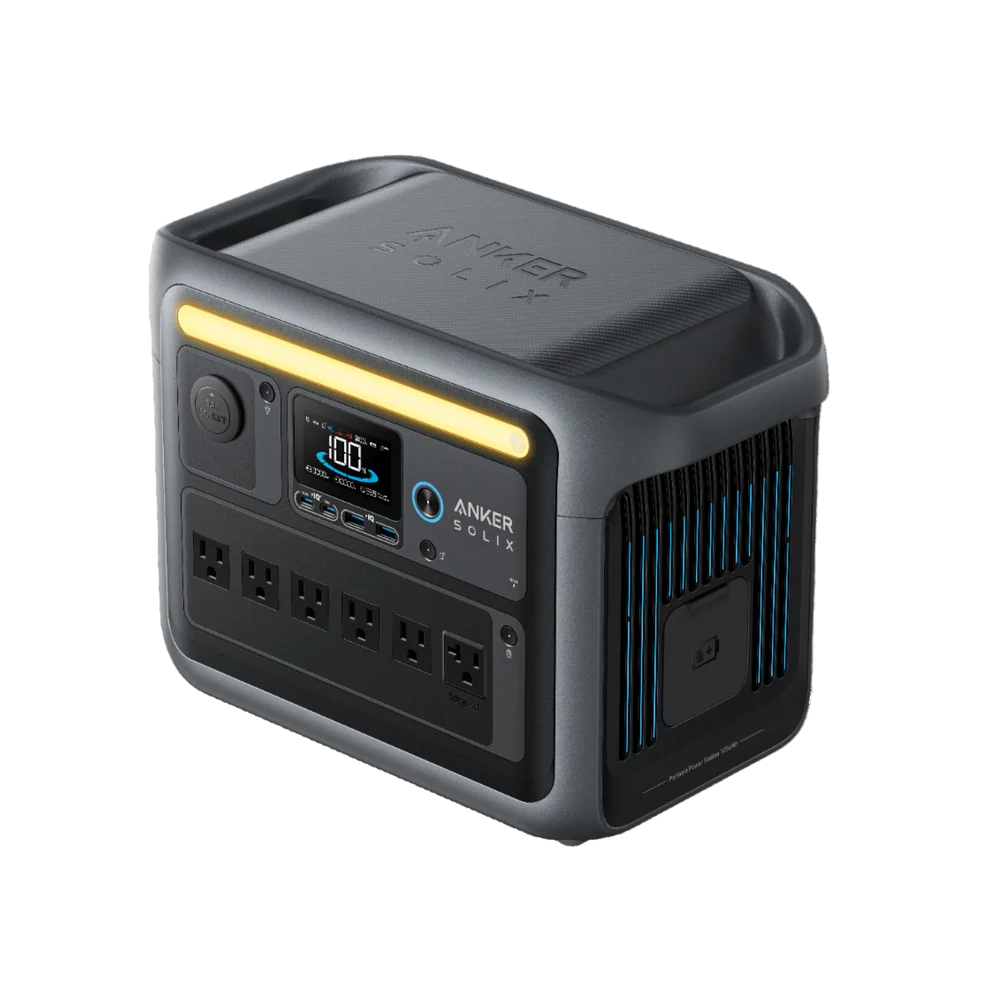




Anker SOLIX C1000 Portable Power Station | 1,056Wh, 1,800W
Price range: $509.99 through $809.99
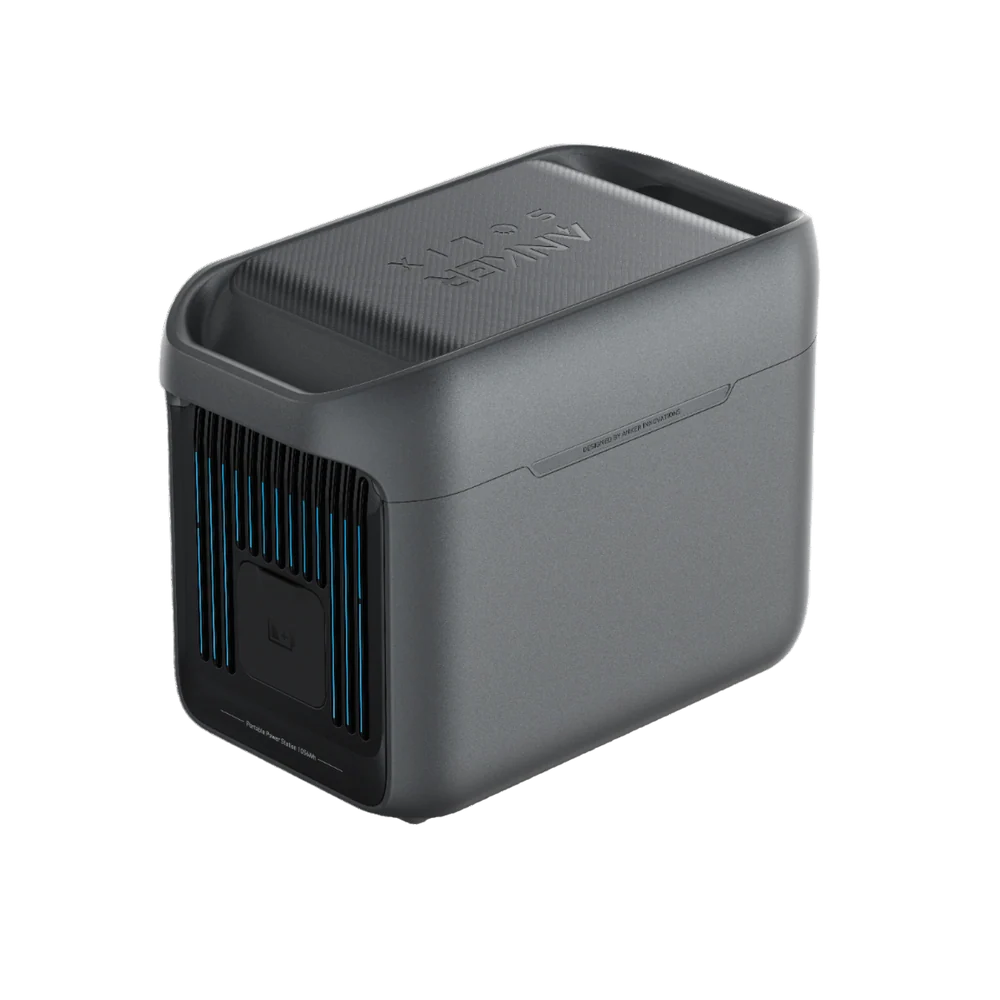
The Anker SOLIX C1000 is a 1,056Wh power station that doubles to 2,112Wh with the BP1000 expansion battery, something the newer Gen 2 cannot do. It runs a fridge for around 17 hours or a CPAP machine for two nights, charges to 80% in 43 minutes, and weighs just 28 lb.
- 1,056Wh LiFePO4, expandable to 2,112Wh with the BP1000
- 1,800W output, 2,400W with SurgePad
- 80% charge in 43 minutes, full in under an hour
- 11 ports including 6 AC outlets and a 100W USB-C
- Certified UPS switchover under 20ms for CPAP machines and computers
- Up to 600W solar input, 3,000+ cycles, 5 year warranty
Anker SOLIX C1000: the 1kWh power station that doubles to 2kWh
The Anker SOLIX C1000 holds 1,056Wh and delivers 1,800W of continuous output, which covers the essentials list most households care about during an outage: a refrigerator, lights, internet, phones and a CPAP machine. What sets it apart from everything else in its class, including Anker’s own newer Gen 2, is that it does not have to stay a 1kWh unit. Add the BP1000 expansion battery and the same power station becomes 2,112Wh.
That matters more than it sounds. Most people underestimate how long an outage will last the first time, and a unit you can double later is a purchase you do not have to make twice.
What the Anker C1000 can run
Estimated runtimes on a full charge, one device at a time, assuming about 85% usable capacity after inverter losses. Double every figure if you add the BP1000 expansion battery.
| Appliance | Typical draw | Estimated runtime |
|---|---|---|
| Wi-Fi router and modem | 20W | About 45 hours |
| CPAP machine (no humidifier) | 40W | About 22 hours, over two nights |
| Full size refrigerator | 150W while running | Around 17 hours, as the compressor cycles on and off |
| LED lights, five bulbs | 50W | About 18 hours |
| Laptop | 60W | About 15 hours |
| 55 inch LED TV | 120W | About 7.5 hours |
| Portable fridge or cooler | 60W | About 15 hours |
| Coffee maker | 1,000W | About 54 minutes |
| Microwave | 1,200W | About 45 minutes of cooking |
| Smartphone | About 15Wh per charge | Roughly 55 full charges |
To size a system around your own appliance list, use our power station sizing calculator, or check what each device draws with the wattage calculator.
Key features
Expandable to 2,112Wh
The BP1000 expansion battery adds another 1,056Wh through the same inverter, screen and app. Worth knowing before you compare models: the BP1000 works only with the original C1000, and the newer C1000 Gen 2 cannot be expanded at all. If future capacity matters to you, this is the model to buy.
1,800W output with 2,400W SurgePad
1,800W continuous covers a fridge, a microwave or a coffee maker. SurgePad technology lifts output to 2,400W for heat generating appliances such as kettles and hair dryers. Anker notes that SurgePad suits heating devices rather than precision electronics with strict voltage requirements, so plan motors and sensitive equipment around the 1,800W figure.
11 ports, 6 AC outlets
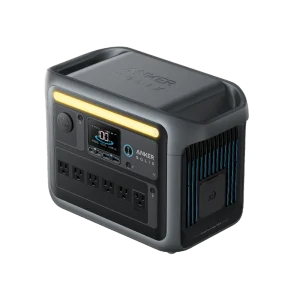
Six AC outlets, two USB-C ports (100W and 30W), two USB-A ports and a 12V car socket, eleven outputs in total on the US model. Six AC outlets is generous at this size, and during an outage it is the difference between powering the essentials and juggling extension leads.
80% charge in 43 minutes
From a wall outlet the C1000 accepts up to 1,300W and reaches 80% in 43 minutes, with a full charge in under an hour. It also takes up to 600W of solar through an 11 to 60V MPPT input, or charges from a car socket, or from your vehicle’s alternator with Anker’s alternator charger.
UPS switchover under 20ms
Leave it plugged into the wall with your equipment connected, and it takes over in under 20 milliseconds when the grid drops, certified rather than estimated. Fast enough that a CPAP machine, a desktop computer or a router keeps running without noticing. The C1000 is certified by SGS to UL 1012, UL 1778, UL 1973 and UL 60730.
A decade of use, and 28 lb to carry
LiFePO4 cells rated for more than 3,000 cycles to 80% capacity, which Anker puts at around ten years, backed by a 5 year warranty. At 28.4 lb it is a genuine one person carry, which not every 1kWh unit manages.
Choosing your bundle
This listing offers four options, and the right one depends on how you plan to use it.
- Anker SOLIX C1000 on its own. The right choice for home backup where you charge from the wall before a storm. Everything above applies.
- C1000 with the BP1000 expansion battery. Doubles capacity to 2,112Wh. Pick this if you are covering a multi day outage, living off grid at weekends, or you simply want the headroom. Cheaper bought together than added later.
- C1000 with the alternator charger. Charges from your vehicle’s alternator while you drive, far faster than a standard 12V car socket. The option for RV, van and overlanding use, where the drive between stops becomes your charging time.
- C1000 with the water resistant bag. Protection from dust, rain and knocks in transit. Sensible if the unit lives in a truck bed, a garage or a boat rather than a closet.
Anker SOLIX C1000 vs C1000 Gen 2
Both are excellent, and they suit different buyers. Here is the honest comparison.
| C1000 (this model) | C1000 Gen 2 | |
|---|---|---|
| Capacity | 1,056Wh | 1,024Wh |
| Expandable | Yes, to 2,112Wh with BP1000 | No |
| Continuous output | 1,800W | 2,000W |
| Surge | 2,400W SurgePad | 3,000W |
| AC recharge | 80% in 43 minutes, full under an hour | Full in 49 minutes |
| Max AC input | 1,300W | 1,600W |
| UPS switchover | Under 20ms | Under 10ms |
| Solar input | 600W | 600W |
| AC outlets | 6 | Fewer, 10 ports in total |
| Weight | 28.4 lb | 24.9 lb |
Which one? Choose this C1000 if expandability matters, or if you want six AC outlets. Choose the C1000 Gen 2 if you want the faster recharge, more output and the lighter body, and you are confident 1kWh is all you will ever need. The Gen 2 is the better standalone unit. This one is the better system.
Anker SOLIX C1000 specifications
| Capacity | 1,056Wh, expandable to 2,112Wh with BP1000 |
|---|---|
| Battery chemistry | LiFePO4, 3,000+ cycles to 80% capacity |
| AC output | 1,800W continuous, 2,400W SurgePad, pure sine wave |
| Output ports | 11 on the US model: 6 AC, 2 USB-C, 2 USB-A, 12V car socket |
| USB-C output | 100W and 30W, 130W total |
| Car socket output | 12V, 10A, 120W |
| AC input | Up to 1,300W |
| AC recharge | 80% in 43 minutes, full in under an hour |
| Solar input | Up to 600W, 11 to 60V MPPT, XT-60 connector |
| UPS switchover | Under 20ms, certified |
| Safety certification | SGS certified to UL 1012, UL 1778, UL 1973, UL 60730 |
| Discharge temperature | -4°F to 104°F |
| Charge temperature | 32°F to 104°F |
| Dimensions | 14.8 x 8.07 x 10.5 in |
| Weight | 28.4 lb |
| Connectivity | Wi-Fi and Bluetooth, Anker app |
| Warranty | 5 year manufacturer warranty |
Frequently asked questions
What is the difference between the C1000 and the C1000 Gen 2?
The Anker SOLIX C1000 is expandable to 2,112Wh and has six AC outlets. The Gen 2 is not expandable, but charges faster (49 minutes to full against 43 minutes to 80%), outputs 2,000W instead of 1,800W and switches over in half the time as a UPS. Pick this model for room to grow, the Gen 2 for a faster, more powerful standalone unit.
Can I add an expansion battery later?
Yes. The BP1000 adds 1,056Wh for a total of 2,112Wh and can be bought at any time. It works only with this Anker SOLIX C1000, not with the Gen 2 or with other Anker batteries such as the BP2000 or BP3800. Buying the bundle up front usually costs less than adding it later.
What does the alternator charger do?
It charges the Anker SOLIX C1000 from your vehicle’s alternator as you drive, much faster than a standard 12V car socket. If you travel between campsites or job sites, it turns driving time into charging time, which is the practical way to stay powered off grid for days.
Can it run a CPAP machine overnight?
Comfortably. A CPAP without a humidifier draws about 40W, so a full charge lasts around 22 hours, more than two nights. With the UPS switchover under 20ms, you can also leave it plugged in as a bedside backup that takes over silently if the power fails.
How long does it take to charge?
The Anker SOLIX C1000 takes about 43 minutes to 80% from a wall outlet, and under an hour to full. From 600W of solar it takes a few hours in strong sun. You can also charge from a car socket or an alternator charger.
Is it safe to use indoors?
Yes. No fuel, no exhaust and no carbon monoxide, so unlike a gas generator it can run in a bedroom or beside medical equipment. It is SGS certified to four UL standards, including UL 1778 for uninterruptible power systems. Keep it on a hard surface with space for airflow.
Buy with confidence
Ships with tracking from our US warehouse to all 50 states. Warranty claims are handled by our team rather than passed to a manufacturer queue. See our warranty, shipping and returns policies, or contact us if you are weighing this against the Gen 2 and want a straight answer.
Be the first to review “Anker SOLIX C1000 Portable Power Station | 1,056Wh, 1,800W”
Related products





Reviews
There are no reviews yet.