
Home › Guides › How to Choose a Power Station
Buyer’s GuideHow to Choose a Portable Power Station Without Guessing
Capacity, output and surge decide whether a unit runs your fridge or trips out trying. Here’s what each number means, a wattage chart for common appliances, and a calculator that sizes a system around your actual load.
Jump to the CalculatorThe short answer
Add up the watts of everything you want to run, multiply by the hours you need it, then add about 20% for conversion losses. That number in watt-hours is your minimum capacity. Most households covering a fridge, lights, internet and phones for a full day land between 1,500Wh and 2,500Wh.
Capacity alone isn’t enough, though — the unit also has to deliver enough watts at once, and survive the startup spike when a motor kicks in. All three numbers are explained below.
The three numbers that matter
Nearly every bad power station purchase comes from reading one of these numbers and ignoring the other two.
Capacity
How much energy is stored — how long it runs. A 1,000Wh unit delivers 100 watts for roughly 10 hours, or 500 watts for about 2. This is the number in the product name: “Explorer 1000” means about 1,000Wh.
Continuous output
How much it can deliver at once — what it can run. A 1,800W inverter handles a microwave; a 300W one won’t, no matter how big its battery is. Add up everything you’ll plug in simultaneously.
Startup spike
Anything with a motor or compressor draws two to three times its running watts for a fraction of a second at startup. A fridge that runs at 150W can spike past 800W. Undersize here and the unit cuts out.
How they work together
Think of it as a water tank. Capacity is how much water is in the tank. Continuous output is how wide the pipe is. Surge is whether the pipe survives someone opening the valve all at once. You need all three sized correctly — a big tank with a narrow pipe still can’t fill a bucket quickly.
One more term you’ll see: usable capacity. A unit rated 1,000Wh doesn’t deliver 1,000Wh to your appliances, because converting DC battery power to AC household power loses energy as heat. Budget 85% of the rated figure, which is exactly what the calculator below does.
Appliance wattage chart
Typical draw for common US household and outdoor appliances. Your own labels beat any chart — look for the sticker on the back or underside of the appliance, which lists watts, or amps you can multiply by 120 to get watts.
| Appliance | Running watts | Startup surge | Runs on 1,000Wh for |
|---|---|---|---|
| Refrigerator (full size) | 150 W | 800 W | ~5.5 hrs* |
| Chest freezer | 100 W | 600 W | ~8.5 hrs* |
| CPAP (no humidifier) | 40 W | — | ~21 hrs |
| CPAP (with humidifier) | 90 W | — | ~9 hrs |
| Wi-Fi router + modem | 20 W | — | ~42 hrs |
| LED lights (5 bulbs) | 50 W | — | ~17 hrs |
| Laptop | 60 W | — | ~14 hrs |
| Phone charging | 10 W | — | ~85 hrs |
| TV (55″ LED) | 120 W | — | ~7 hrs |
| Box fan | 50 W | 150 W | ~17 hrs |
| Furnace blower | 600 W | 1,500 W | ~1.4 hrs |
| Sump pump (1/3 HP) | 800 W | 2,000 W | ~1 hr* |
| Well pump (1/2 HP) | 1,000 W | 2,100 W | ~50 min* |
| Window AC (8,000 BTU) | 700 W | 1,800 W | ~1.2 hrs |
| Microwave (1,000W output) | 1,200 W | 1,500 W | ~42 min |
| Coffee maker | 1,000 W | — | ~50 min |
| Electric kettle | 1,500 W | — | ~34 min |
| Space heater | 1,500 W | — | ~34 min |
| Circular saw | 1,400 W | 2,300 W | ~36 min |
| Starlink dish | 60 W | — | ~14 hrs |
| Oxygen concentrator | 350 W | — | ~2.4 hrs |
Runtimes assume 85% usable capacity. *Fridges, freezers and pumps cycle on and off rather than running constantly, so real-world runtime is roughly three times the figure shown — a 1,000Wh unit runs a typical fridge for around 16 hours, not 5.5.
Power station sizing calculator
Pick what you need to run, set the hours, and get the capacity, output and surge to shop for. Nothing is sent anywhere — it all runs in your browser.
Work it out by hand
The interactive calculator needs JavaScript, which isn’t running right now. The maths is simple enough to do on paper:
Step 2 daily watt-hours × days of backup ÷ 0.85 = capacity you need (Wh)
Step 3 add the watts of everything running at once = continuous output (W)
Step 4 that total + the biggest startup surge = surge rating (W)
Step 5 daily watt-hours ÷ 4 sun-hours ÷ 0.75 = solar watts for daily recharge
Use the wattage chart above for the appliance figures, or send us your list on WhatsApp and we’ll size it for you.
Send us your list1. What do you need to run?
Tap to add. Watts are typical values — edit any of them if your appliance label says different.
2. Your load
Set how many, and how many hours a day each one runs.
Capacity you need
0Wh
Pick some appliances to see your numbers.
Start by adding appliances
Your recommendation will appear here once there’s something to size.
See matching unitsEstimates for planning, not an electrical specification. Fridges and pumps cycle rather than run constantly, so real runtime is usually longer. Not sure? Send us the list and we’ll check it.
Battery chemistry: LiFePO4 vs NMC
This single spec decides whether your unit is still useful in eight years. It’s often buried in the fine print, and it’s the biggest difference between two units that look identical on capacity.
| LiFePO4 (LFP) | NMC / Li-ion | |
|---|---|---|
| Cycle life to 80% capacity | 3,000–6,000 cycles | 500–1,000 cycles |
| Realistic lifespan, daily use | 10+ years | 2–3 years |
| Thermal stability | Very high | Moderate |
| Weight for the same capacity | Heavier | Lighter |
| Cost for the same capacity | Higher up front | Lower up front |
| Best for | Home backup, off-grid, daily cycling | Occasional use where weight matters |
The arithmetic is worth doing. A 3,000-cycle LiFePO4 unit charged daily lasts roughly eight years. A 500-cycle NMC unit on the same schedule is done in under eighteen months. Unless you’re carrying it on your back regularly, LiFePO4 is the right answer for anything bought as backup power.
Recharging and solar input
A power station is a battery, not a generator — it only helps for as long as you can refill it. In a two-day outage that’s fine from the wall beforehand. In a week-long one, or off-grid, recharging is the whole game.
The three ways in
- Wall outlet. Fastest. Modern units refill in 1–2 hours. Keep yours topped up during storm season, not sitting at 40%.
- Car / 12V. Slow — typically 8–12 hours for a mid-size unit — but it works while you drive, which makes it ideal for RV and road use.
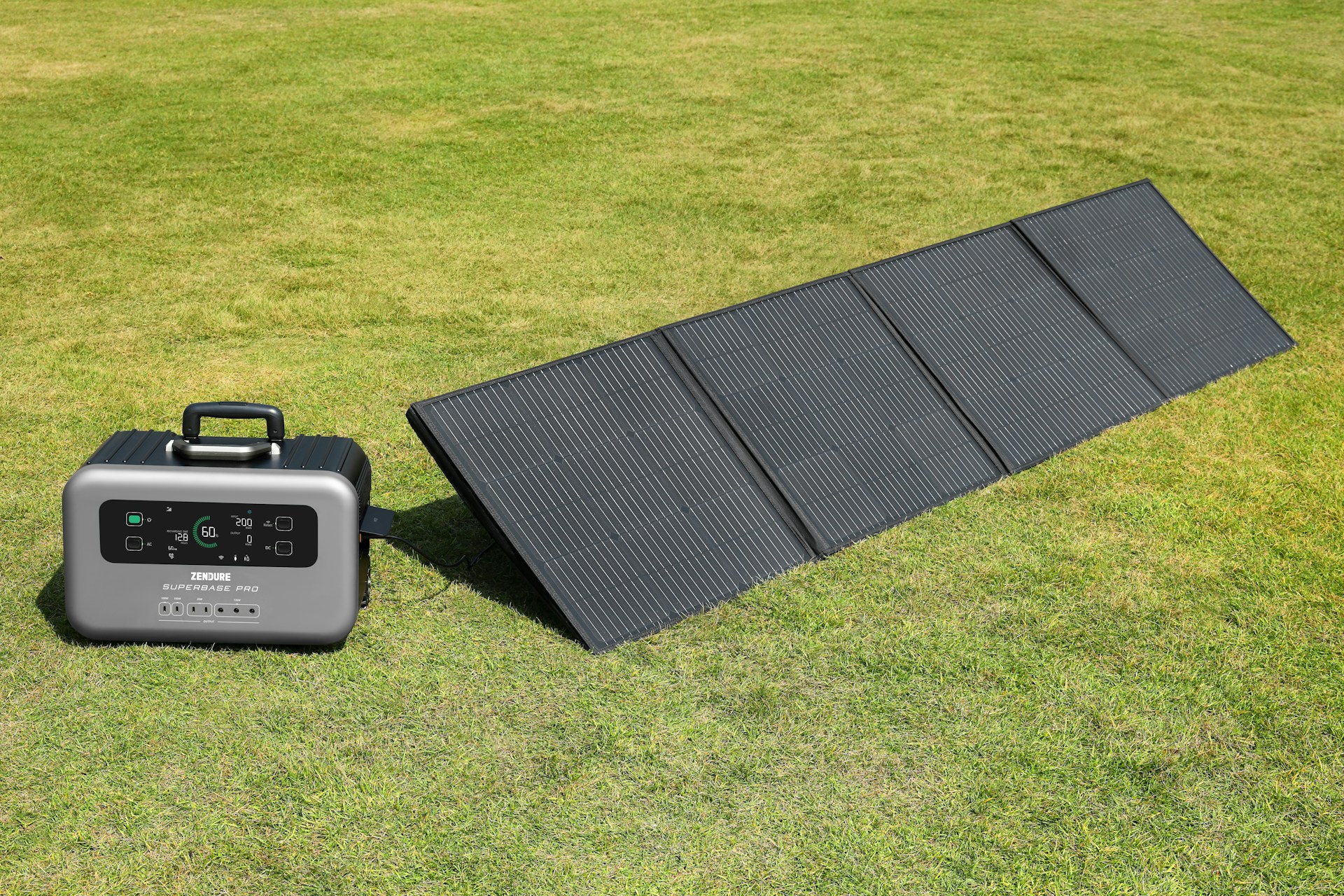
- Solar panels. The only genuinely off-grid option. Check the unit’s maximum solar input in watts, and its voltage window, before buying panels.
How much solar do you actually need?
Divide your daily watt-hours by four (a realistic average of usable peak sun hours across most of the US), then divide by 0.75 to allow for panel angle, temperature and charge losses. Using 200Wh a day means roughly 400W of panels to refill reliably — not the 200W the arithmetic suggests at first glance.
Rated panel wattage assumes laboratory conditions. Expect 60–75% of the sticker figure in real use, more like 40% on an overcast day. Oversizing panels is cheap insurance; oversizing the battery is not.
Ports, inverters and expandability
Pure sine wave, not modified
Any unit worth buying outputs pure sine wave AC — the same waveform as your wall outlet. Modified sine wave is cheaper and will damage or refuse to run sensitive electronics: CPAP machines, some medical devices, variable-speed motors and certain laptop chargers. If a listing doesn’t say “pure sine wave”, assume it isn’t.
Count your outlets honestly
People consistently underestimate this. Count what you’d plug in during an actual outage — fridge, two phones, a lamp, the router, a laptop — and you’re at five or six. Look for at least three AC outlets plus USB-C Power Delivery. A 100W USB-C port charges a laptop directly, skipping the inverter and saving about 15% of the energy.
Expandable or not
Some units accept add-on battery packs that double or triple capacity later. That’s the difference between outgrowing a purchase and extending it. If you’re buying at the edge of your budget, an expandable unit is the safer choice — start with the base and add capacity when you can.
Weight and handles
A 2,000Wh LiFePO4 unit weighs 45–60 lbs. That’s a two-hand lift, and for many people a two-person lift. Anything above 3,000Wh should have wheels. If you’ll be moving it between the house and an RV regularly, weight matters more than the spec sheet implies.
What size for your situation
Rough starting points. Run your own numbers through the calculator above before buying — these are the ranges most people in each situation land in.
Phones, laptops, camping
Devices and lights only, no heating or motors. Light enough to carry one-handed. Fine for a weekend, useless for a fridge.
Outage essentials
Fridge, router, lights and phones overnight, or a CPAP for two nights. The most common first purchase — but run the calculator, since a full 24 hours with a fridge usually needs 2,000Wh.
Multi-day outages, RV living
Adds a microwave, coffee maker or power tools, and carries the essentials across two to three days. Needs 1,800W+ continuous output to be worth it.
Whole-home and off-grid
Well pumps, furnace blowers, window AC, or full-time off-grid with solar. Usually expandable, usually wheeled, and worth pairing with a transfer switch.
Five expensive mistakes
Buying on capacity alone
A 2,000Wh unit with a 1,000W inverter still can’t run a microwave. Check continuous output against your biggest single appliance before you look at the battery size.
Forgetting the startup surge
The most common support call we get. The fridge ran fine for an hour, then the unit shut off when the compressor restarted. Surge rating, not running watts, is what governs motors.
Ignoring battery chemistry
Two units at the same price and capacity can differ by six times in lifespan. If the listing doesn’t say LiFePO4, it’s almost certainly NMC and priced accordingly.
Assuming rated solar wattage
400W of panels delivers 400W only at noon, clear sky, perfect angle. Plan around two-thirds of the rating and you won’t be disappointed.
Trying to run electric heat
Space heaters, electric kettles, hair dryers and electric water heaters all draw 1,500W or more continuously. They will flatten any portable unit in under an hour. Plan around them, not for them.
Common questions
What size power station do I need for a refrigerator?
A full-size fridge draws about 150 watts while the compressor runs and spikes past 800 watts at startup, but it only runs roughly a third of the time. That works out to around 1,200Wh a day. A 1,000Wh unit with at least 1,000W continuous output and 2,000W surge runs a fridge alone for roughly 16 hours. For a full day plus lights, internet and phones, 2,000Wh is the realistic size.
Can a portable power station run a whole house?
It can run the circuits that matter, not everything at once. With a transfer switch and a 3,600Wh+ expandable system you can cover a fridge, lights, internet, a furnace blower and outlets. Central air conditioning, electric ranges and electric water heaters remain out of reach for portable units — those need a standby generator or a permanently installed battery system.
How long does a power station last before it needs replacing?
It’s measured in charge cycles, not years. LiFePO4 units are rated for 3,000–6,000 cycles to 80% of original capacity, which is ten years or more for typical backup use. NMC units are rated 500–1,000 cycles. “To 80%” matters: the unit doesn’t die at that point, it just holds less.
Is it safe to use indoors?
Yes — that’s the main advantage over a gas generator. There’s no combustion, no exhaust and no carbon monoxide risk, so a power station can sit in a bedroom or beside a hospital bed. Keep it ventilated and off soft surfaces, since the cooling fans need airflow, and don’t store it in a sealed cupboard while charging.
Should I keep it plugged in all the time?
For LiFePO4 units, leaving it on the charger is generally fine — the battery management system stops charging when full. For long-term storage, most manufacturers recommend around 60–80% charge and a top-up every three to six months. Check your specific manual; storage advice varies more between brands than people expect.
Power station or gas generator?
Generators produce more power for longer and cost less per watt, but they’re loud, need fuel on hand, can’t run indoors and require maintenance between uses. Power stations are silent, indoor-safe, maintenance-free and recharge from solar — with a hard ceiling on output. For outages under three days and loads under about 2,000W, a power station is usually the better fit. Beyond that, many people run both.
Still Not Sure What Size You Need?
Send us your appliance list and we’ll size a system around it — including when the cheaper unit is the right answer.